Cosmetic & Family Dentistry · Randolph, MA

Jimmy Lai DMD PC

Your brightest smile starts here. Make a brilliant first impression.

Friendly staff. Beautiful smiles. Welcoming environment.

10 Mazzeo Drive, Suite 209, Randolph, MA 02368

A Team You Can Rely OnQuality, compassionate care.
Protect Your TeethTips to keep your teeth cavity-free.
Healthy Teeth for a LifetimeAnnual checkups keep teeth happy and healthy.
New Patients WelcomeEmergency calls and appointments welcome.

Our Practice

A Beautiful Practice For All Your Dental Needs

We are always welcoming new patients and we would love to have you as part of our dental family. Please explore our web site to learn more about us. You can find information about our staff, our office, and the procedures and services that we offer.

If you have any questions please call us. We love hearing from our patients and anyone who may be interested in becoming one.

We would like to take this opportunity to thank you for choosing our practice for your dental care.

Facility

We are proud to provide a state-of-the-art facility for the highest quality dental care available. It is one of our top priorities to protect the well-being of our valued patients. For this reason, our office meets and surpasses all OSHA (Occupational Safety and Health Administration) and CDC (Center for Disease Control) standards. We are confident that you will feel right at home in our office as we welcome all patients as if they were family.

Appointments

If you would like to make an appointment, please contact our office by phone or email.. Our office facilitates communications and emergency calls and appointments are available and welcome, especially for new patients seeking help.

Financial

We will be more than happy to submit all insurance forms for you and help you recover the most from your benefits. We will do everything we can to help you afford the treatment you need and want. For patients who require major work, a complete payment plan is designed with an appropriate payment schedule. Forms of payment accepted by the office are check, cash, or any major credit card.

Cancellation

If you are unable to keep an appointment, we ask that you kindly provide us with at least 24 hours notice. We ask for this advance notice so that we can offer this appointment to another patient. A fee may be charged if a patient does not show up for an appointment without sufficient notice.

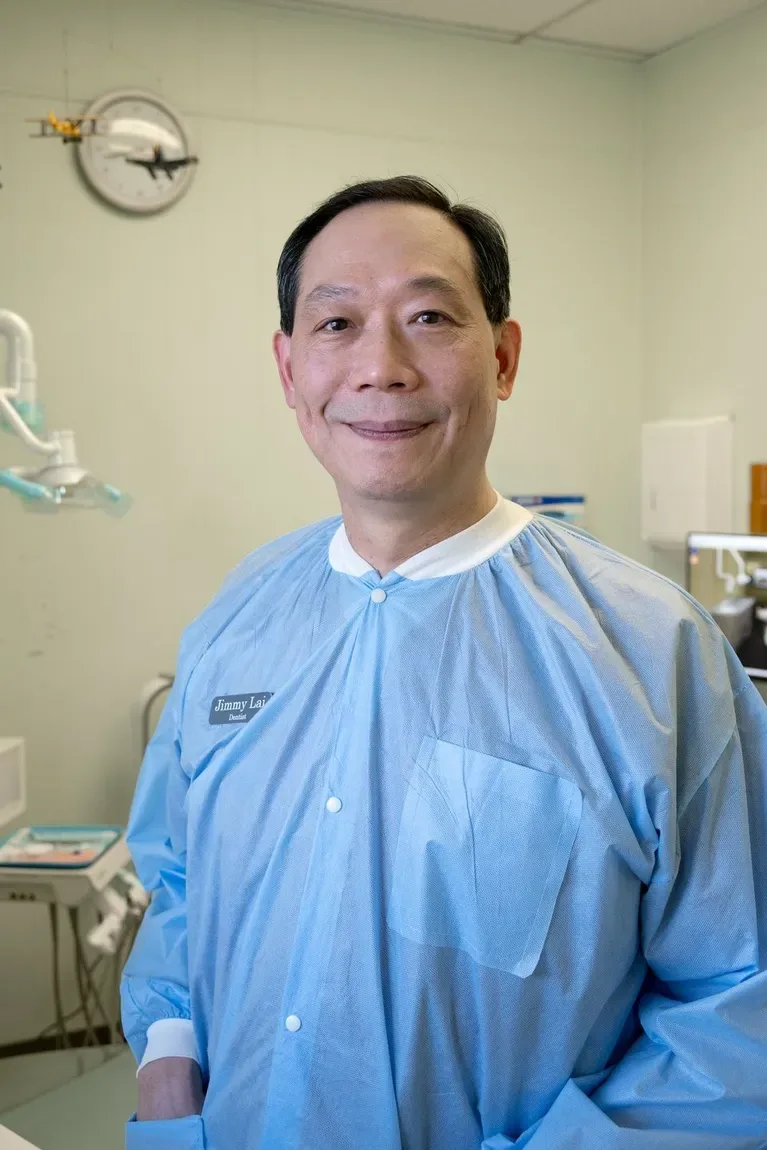
Dr. Jimmy Lai, DMD

Meet the Doctor

Jimmy Lai, DMD

Dr. Lai recognizes that each patient has individual needs; his main goal in dentistry is building trusted, valued relationships by providing personalized, comfortable and outstanding care to all his patients.

Dr. Lai and his family love living in the Northeast and enjoy all it has to offer. In his free time, Dr. Lai loves to be outside. He enjoys hiking, camping, fishing, and spending time with his wife and their two boys.

Our Services

Featured Services

We look forward to hearing from you. Tap any service to read more.

Dental Hygiene

Dental Hygiene

While at our office, we make sure that you receive the highest level of service and ensure that our dental work is of the highest quality. To ensure that you maintain great oral health, this level of quality needs to extend into your personal oral hygiene routine. We can help you establish a dental hygiene routine that will keep your teeth healthy and white. If you have any questions about your current hygiene plan please ask us.

Your teeth are not the only important part of your mouth. Your gums are essential to oral hygiene as well. We can provide periodontal cleanings and treatment, or refer you to one of our recommended specialists. Please let us know if you have any questions.

Implants

Dental Implants

Dental implants are a permanent and appealing solution to replace missing or extracted teeth. They are better than other alternatives like bridges because no additional teeth need to be altered to place the new tooth.

The entire implant process is performed over the course of a few months. The first part of the process is to install the implant itself, where a screw is placed into the jaw bone. An incision is made in the gum so that the implant can be inserted. Multiple implants can be placed at once if necessary. After the implants are placed the gums are sutured.

The implant must be allowed about 3-6 months to heal, and during this time the jaw bone will form around the implant in a process called osseointegration. During this healing time you can have temporary crowns installed so that you can eat and speak normally and maintain a proper aesthetic appearance for your smile.

After the implant has healed it is time to place an abutment on the implant. The abutment serves as the base for your new tooth. One this is placed an impression of the abutment is taken and is used to create your permanent restoration. Some offices have an onsite lab to create the crown, but others will have to send it to an outside lab. Once the restoration is completed you can return to the office to attach the restoration permanently. Your smile will look just like it used to, and after a short period of getting used to the implant it will feel just like one of your own teeth.

Mini Implants

Mini dental implants are about half the size in diameter of a regular dental implant. This offers many benefits, and they can also be used in situations where regular implants cannot. If an implant needs to be placed in a narrow space, mini implants are the preferred method because of their smaller size.

A main use for mini implants is to install a full upper or lower denture. A series of mini implants (4-6) are placed along the gum line and they serve as the base of the denture. Rather than placing a single implant for a single tooth, an entire lower or upper set of teeth are directly attached to the gum line.

The small size of mini implants often means that no incision needs to be made to place the implant. They can usually be inserted right through the gum into the bone. This eliminates the need for a recovery period, and the restoration can usually be placed right away or only a short time after.

Mini implants are also less expensive than regular implants. Only your dentist knows if mini implants are right for you, so call for your consultation today.

Dental Implant FAQs
What is a dental implant?

A dental implant is a permanent new root for a missing tooth. It is a titanium screw that is placed into the jaw bone. An abutment and crown is then placed on the implant to provide a new tooth that is permanent and looks just like a natural tooth.

How are dental implants different than dentures?

Dentures are a removable set of teeth or partial set of teeth that need to be removed and cared for in a special manner. They can often feel bulky and are difficult to get used to. Dental implants are a permanent replacement for missing teeth that can be cared for just like natural teeth.

What are the benefits of dental implants?

Dental implants look and feel just like real teeth, they are permanent, you can eat the foods you want without any fear of embarrassment, and they procedure is very successful and fairly inexpensive.

Who can place a dental implant?

Your dentist may be able to perform implants in their own office based on their training. If not, they will recommend you to an implantologist, cosmetic dentist, or another specialist that will perform the procedure.

How much do implants cost?

The price of your dental implants will vary based on the level of experience of your doctor, how many implants you are having placed, amount of insurance coverage, and more. Schedule a consultation with us to determine a price for your implants and a financing plan if necessary.

Do dental implants hurt?

No. A local anesthetic will be given before the procedure so that you do not feel any pain. If you have anxiety or fear you should discuss sedation options with your dentist.

How long do implants last?

When cared for properly, implants should last a lifetime. Proper oral hygiene and regular dental visits are essential to the success of your implant.

Also offered Iluma Ultra Cone Beam CT Scanner · Osstell · Simplant

Cosmetic

Lumineers

LUMINEERS

Lumineers are very thinly shaped porcelain that is bonded to your tooth. The fact that they are very thin allows us to minimize the preparation of the tooth to create beautiful transformations of your teeth

Due to the fact that there is minimal preparation, there is often little to no discomfort in this procedure. The procedure often requires 1-2 visits.

Give us a call today to see if Lumineers will work for your smile!

Veneers

Veneers are an excellent way to redesign and reshape your entire mouth. Veneers are a very thin ceramic shell that covers your existing tooth structure. In placing these new veneers on your teeth, you are able to fix the look of issues such as staining, cracked teeth, spaces, misaligned teeth, chipped teeth and many other issues.

In terms of the process to place veneers, it is a process that takes approximately two to three visits. In the first visit, we will discuss the new shape and look of what we are going to accomplish by placing the veneers. Once we have put a plan in place, we will carefully prepare the teeth for the placement of the new veneers. As we complete this piece of the process, the next step is to take an impression of the newly prepared teeth. This impression will be sent to our laboratory for the final product to be fabricated. We only utilize the highest standard laboratory for fabrication of all of our work. This process at the laboratory takes between 10-14 days. While the new veneers are being fabricated at the lab, we will provide you with a beautiful temporary solution to wear for this time.

As the veneers are finalized, we will make every effort to make sure that your new veneers will feel just like your natural teeth. We will bond them into place ensuring that you can enjoy your new smile for a very long time!

Whitening

Keeping our teeth their whitest is a lot harder than it sounds. With all the coffee, wine, smoking and other foods that have the ability to stain our teeth on a daily basis, even proper maintenance sometimes leaves them a little lackluster. Teeth whitening is an excellent way to restore the natural color of your teeth or even make them whiter than your natural color if you would like.

To accomplish the whitening of your teeth, we utilize a tray whitening system. This tray whitening system is completed in 2 steps. The first step is to make an impression of your teeth. With this impression, we'll craft you custom whitening trays that you can use over and over. Finally, you will take the whitening gel and put it in the gel for a short period of time over a period of a few days. This often results in a whiter smile of 4 - 8 shades!

Please contact us today to see if you are a candidate for this type of whitening

ZOOM!

Keeping our teeth their whitest is a lot harder than it sounds. With all the coffee, wine, smoking and other foods that have the ability to stain our teeth on a daily basis, even proper maintenance sometimes leaves them a little lackluster. Teeth whitening is an excellent way to restore the natural color of your teeth or even make them whiter than your natural color if you would like.

To accomplish the whitening of your teeth, we utilize a product called ZOOM!. ZOOM! is a chairside whitening procedure that uses a safe whitening gel and a low intensity light to activate the gel. This combination allows us to provide you with teeth that are 6-10 shades whiter in about an hour!

BriteSmile

Keeping our teeth their whitest is a lot harder than it sounds. With all the coffee, wine, smoking and other foods that have the ability to stain our teeth on a daily basis, even proper maintenance sometimes leaves them a little lackluster. Teeth whitening is an excellent way to restore the natural color of your teeth or even make them whiter than your natural color if you would like.

To accomplish the whitening of your teeth, we utilize a product called BriteSmile. BriteSmile is a chairside whitening procedure that uses a safe whitening gel and a low intensity light to activate the gel. This combination allows us to provide you with teeth that are 6-10 shades whiter in about an hour!

Snap On Smile

Snap-On Smile

is a great product for those looking to makeover their smile without undergoing extensive dental procedures.  It works exactly like it sounds, a new set of “teeth” are created that are placed over your current teeth by snapping them in place.  You can have a beautiful new smile in just two quick and painless visits to our office.

Snap-On Smile

is a great option for patients with stained, chipped, cracked, crooked, or missing teeth.  On your first visit with us you will pick the shade and style of your smile.  We will then take an impression of your teeth so the

Snap-On Smile

  • can be properly fitted.  The
  • Snap-On Smile

    is then made with a light, durable resin to create a strong yet thin set of snap on teeth.  In about three weeks you will return for your next visit where your new smile will be waiting!  The Snap-On Smile will be placed onto your current teeth and you will leave the office with a bright new smile.  No drilling, no extractions, no whitening chemicals are necessary – the whole process is quick, easy, and painless.

    Your friends and family will be amazed by your transformation.  You will be able to eat and drink with your

    Snap-On Smile

    , and caring for it is very easy.  We will supply you with a cleaning solution during your final appointment.  It can also be easily removed to clean your natural teeth, to participate in sporting events, or before you go to sleep.  With proper care your

    Snap-On Smile

    can last from 3-5 years.  If you have any questions about

    Snap-On Smile

    or would like to schedule a consultation please give our office a call.  Remember, you are only two short, painless visits away from a beautiful new smile.

  • Bonding

    Bonding is a popular method to enhance the aesthetics of your smile. Bonding can be used to correct cracks or gaps in teeth, as a filling after a cavity has been removed, or to cover up stains or discolored teeth.

    A composite resin is used on the affected tooth or teeth. It is molded and sculpted over an adhesive gel that is placed on the tooth. After the resin has been applied an, LED light is used to harden the resin, which is then polished to give you a fresh, new smile.

    Bonding is an obvious improvement over unsightly silver amalgam fillings. With the advancements in dental technology, bonding usually lasts for over 10 years. It is a safe, affordable, and attractive solution for many dental problems.

    Inlays and Onlays

    Inlays and onlays are often referred to as partial crowns. They use the existing tooth as a base and fit the inlay or onlay onto the tooth. This is done to strengthen the tooth, restore its shape, and prevent further damage. An inlay is done when there is no damage to the cusps of the tooth and the inlay can be placed right on the tooth. An inlay is used when the damage is a little more extensive.

    The decayed area of the tooth is first removed during the procedure. A mold of the tooth is then taken and sent to a dental lab. They create a restoration made from porcelain, gold, or a composite resin. The restoration takes about 2-3 weeks to make, so a temporary inlay or onlay will be placed on the tooth for that time. During your next visit the inlay or onlay will be placed into your mouth and set with cement. Your tooth will look natural and you or anyone else won't be able to tell the difference.

    Endodontics

    Root Canal

    Endodontics is the dental specialty that deals with the nerves of the teeth. Root canals are probably the most notorious procedure in dentistry and the most common procedure relating to endodontics. When a tooth becomes infected it is usually related to the nerves in the root of the tooth. The infected nerves need to be removed. If left untreated an infection can turn into an abscess, which is a much more serious problem that includes bone loss in the jaw.

    The area around the tooth is numbed with a local anesthetic to start the procedure. The dentist will then drill down into the tooth to create an opening into the canal. They will then be able to remove infected tissue and clean the canal. After the infection has been removed, the space if filled with a sealant called gutta percha. It is highly recommended that a tooth that has undergone a root canal is fitted with a crown. This will improve the appearance of the tooth, and will also make it much more likely that the root canal is successful.

    "Root canal" has become a scary term for dental patients to hear, but the benefits of the procedure and advances in dental technology have made it much less "scary". Local anesthetics and proper pain medication allow the procedure to be performed with little to no pain in most cases. There may be some soreness following the procedure, but that is normal for most dental procedures. Over the counter painkillers are usually enough to relieve any pain afterwards, but your dentist may prescribe medication. The procedure will also relieve you from pain caused by the infection allowing you to enjoy all the foods you love without any pain from heat, cold, or biting too hard. If you are experiencing pain consult your dentist today.

    Apicoectomy (Endodontic Surgery)

    An apicoectomy is performed after an unsuccessful root canal. When an infection will not go away or returns after a root canal has been performed this procedure is usually necessary. There are many nerves that may contain the infected tissue, so it is difficult to ensure that all of the infection is removed during a root canal. During an apicoectomy, the tip of the root of the tooth is removed and replaced with a filling.

    In most cases a second root canal is considered before an apicoectomy since it is a simpler, less invasive procedure. Before the apicoectomy begins you will be given a local anesthetic to numb the area. The doctor will start by making an incision in your gum to expose the root of your tooth. Any inflamed tissue will be removed to clean out the area. The surgery takes place in a very small area, and only a few millimeters are removed from the root. For this reason, the doctor will use magnification and small precision instruments to perform the surgery. The precise nature of the surgery gives it a high rate of success. After the root is removed a filling is placed and the gums are sutured. Depending on the type of sutures you may have to return in a few days to have them removed, or dissolving sutures may be used instead. Over the course of the next few months the bone will heal around the root.

    Retreatment

    With proper care, most teeth that have had endodontic (root canal) treatment can last as long as other natural teeth. Root canals performed by endodontists (root canal specialists) have a 95% success rate. In some cases, however, a tooth that has received endodontic treatment fails to heal. Occasionally, the tooth becomes painful or diseased months or even years after successful treatment.

    Why do I need retreatment?

    As occasionally happens with any dental or medical procedure, a tooth may not heal as expected after initial treatment for a variety of reasons:

    Narrow or curved canals were not treated during the initial procedure.

    Complicated canal anatomy went undetected in the first procedure.

    The placement of the crown or other restoration was delayed following the endodontic treatment.

    The restoration did not prevent salivary contamination to the inside of the tooth.

    In other cases, a new problem can jeopardize a tooth that was successfully treated.

    For example:

    New decay can expose the root canal filling material to bacteria, causing a new infection in the tooth. A loose, cracked or broken crown or filling can expose the tooth to a new infection. A tooth sustains a fracture. Retreatment is performed in two visits and involves the following:

    At the initial visit the endodontist will examine the tooth, take x-rays and discuss your treatment options. If you and your endodontist choose retreatment, the retreatment will be scheduled at that time for a future date.

    At the retreatment appointment the endodontist will administer local anesthetic to numb the tooth. After the tooth is numb, the endodontist will reopen your tooth to gain access to the root canal filling material. In many cases, complex restorative materials (crown, post and core material) must be disassembled and removed to permit access to the root canals.

    After removing the canal filling, the endodontist can clean the canals and carefully examine the inside of your tooth using a microscope, searching for any additional canals or unusual anatomy that requires treatment.

    After cleaning the canals, the endodontist will fill and seal the canals and place a temporary filling in the tooth. Post space may also be prepared at this time.

    After your endodontist completes retreatment, you will need to return to your dentist as soon as possible to have a new crown or other restoration placed on the tooth to protect and restore it to full function.

    If the canals are unusually narrow or blocked, your endodontist may recommend endodontic surgery.
    Also offered Endo Microscope

    Restorative

    Bridges

    Dental bridges are a great way to replace missing teeth. Your existing teeth are used to literally create a bridge to cross the area where your tooth is missing. Bridges are made from gold, metal, alloys, or porcelain to ensure that they are strong and durable.

    The process of creating a bridge begins by creating abutments out of your existing teeth where the bridge will be attached. The existing teeth are recontoured to provide a base for the bridge. After the abutments have been created, a mold is taken of the area which is sent to a dental lab. The lab is able to use the mold to create a bridge that will fit properly and feel as close to your natural teeth as possible. The bridge consists of two crowns on either end to place on the abutments and a pontic, which is the new tooth that replaces your missing tooth.

    We will fit you with a temporary bridge while we wait for the lab to craft your permanent bridge. This will protect the abutments and the exposed gum areas and look more appealing than having a missing tooth. When the permanent bridge has been created, you will have a follow up visit to set the bridge. It will be placed on the abutments and the dentist will then use an adhesive to make sure that the bridge is set.

    The bridge may take a little while to get used to, but after a few days it should feel like you have your own teeth back again. You should eat soft foods for the first few days after having your bridge placed. After the initial phase, you will be able to eat whatever you want with no issues.

    If you are missing a tooth you should strongly consider having it replaced. Besides the aesthetic disadvantage of missing a tooth, it could also cause structural changes to your mouth and jaw, as well as making it difficult to eat or speak properly. Set up an appointment today to restore your smile.

    Crowns

    Crowns

    Over time our teeth begin to weaken and become more susceptible to problems such as decay, cracks, discoloration and others. If you feel your smile isn’t what it once was, crowns can help you recover your smile. If your dentist notices that a tooth is decayed or seems weakened/cracked a crown may be necessary to make sure that there are no additional problems with the tooth. In cases like this a filling or bonding will not be sufficient.

    Crowns can be made from porcelain, porcelain fused to metal, or a full gold crown. To maintain a natural look and feel a porcelain finished crown is best, as it can be matched to the shade of your other teeth. This will allow it to blend in and appear just like one of your natural teeth.

    The process of installing a crown takes 2-3 visits to the dentist. On the first visit the tooth will be reshaped by filing down the enamel so that the crown can be placed over it. You will be given a local anesthetic before this part of the procedure so that you do not experience any discomfort. Once the tooth has been reshaped, a mold will be taken of that tooth and the surrounding teeth. This mold will be sent to a dental lab so that your new crown can be made so that it fits in the spot created for it and looks the same relative to the surrounding teeth. Before leaving, your dentist will fit you with a temporary crown until your permanent crown is ready.

    The crown takes about 2-3 weeks to be returned to your dentist. At this time you will have another appointment to place and fit the permanent crown. You will again have a local anesthetic to numb the area and the tooth will be placed using a cement to ensure the tooth sets in place. When you look in the mirror, you will see your old smile back. Crowns are durable and will usually last about 10-15 years. You should care for it as you would any of your other teeth with regular brushing and flossing. Call us today if you would like to learn more about how crowns can help restore your smile.

    Dentures

    Dentures are a replacement for missing teeth that can be removed and put back into your mouth as you please. Depending on each individual patient case, they may receive full or partial dentures. Full dentures are used when all of the natural teeth are removed from the mouth and replaced with a full set of dentures. There are two types of full dentures.

    Conventional Full Dentures - This is when all the teeth are removed and the tissue is given time to heal before the dentures are placed. It could take a few months for the gum tissue to heal completely, and during this time you will be without teeth.

    Immediate Full Dentures - Prior to having your teeth removed, your dentist takes measurements and has dentures fitted for your mouth. After removing the teeth, the dentures are immediately placed in your mouth. The benefit is that you do not have to spend any time without teeth. You will, however, need to have a follow up visit to refit your dentures because the jaw bone will slightly change shape as your mouth heels. The dentures will need to be tightened after the jaw bone has healed.

    Partial dentures are another option when not all of your teeth need to be removed. This is similar to a bridge, but it is not a permanent fixture in your mouth.

    Your dentures may take some time to get used to. The flesh colored base of the dentures is placed over your gums. Some people say that it feels bulky or that they don't have enough room for their tongue. Other times the dentures might feel loose. These feelings will affect the way you eat and talk for a little while. Over time, your mouth becomes trained to eat and speak with your dentures and they begin to feel more and more like your natural teeth. They may never feel perfectly comfortable, but it is much better than the alternative of not having teeth.

    Even though dentures are not real teeth, you should care for them like they are. You should brush them to remove plaque and food particles before removing your dentures. After they have been removed you should place them directly into room temperature water or a denture cleaning solution. Never use hot water because it could warp the dentures. Your dentures are delicate, so make sure you are careful when handling them so you don't drop them. Also, never try to adjust your dentures yourself. You could ruin them, so you should always seek assistance from your dentist if they feel uncomfortable or loose.

    Also offered Bonding and White Fillings (see Cosmetic)

    Pediatric

    Sealants

    Sealants are a great way to protect against tooth decay and cavities on your back teeth (molars). These are the teeth that are most vulnerable to cavities and decay because they are used in the chewing process, and are the most difficult to reach and clean. Molars first come in at around 5-7 years of age, with a second set coming in between the ages of 11-14. It is best to have a sealant placed when the molars first come in to ensure they are protected early.

    To place a sealant an adhesive is first applied to the teeth. The sealant is then placed over the adhesive as a liquid, as if it is painted right onto the tooth. The liquid then hardens and creates a barrier between your tooth and any plaque, food particles, and bacteria. Sealants last for about 10 years and can be reapplied if necessary.

    Mouth Guards

    Mouth guards are an essential piece of equipment in contact sports.  They should be worn by athletes of all ages who participate in sports such as:

    Football

  • Hockey
  • Lacrosse
  • Wrestling
  • Basketball
  • Baseball/Softball
  • Soccer

    …any sport where contact is a possibility.

    Wearing a mouth guard helps prevent against structural damage to your teeth and jaw and also helps prevent injuries such as lacerations to your cheeks, tongue, and lips.  Mouth guards have also been shown to help decrease the risk of concussions.

    Mouth guards are available in most any sporting goods store, but you should be careful when purchasing a mouth guard.  Mouth guards like this do not offer the best level of protection.  They are also usually ill-fitting and uncomfortable.

    For the highest level of comfort and protection, you should visit your dentist for a custom mouth guard fitting.  A custom mouth guard is created specifically for the optimal protection of YOUR mouth.  It is created with thin plastic that is hardened to protect your teeth.  The thinness of the custom mouth guard allows for easy breathing and also allows for easy communication (especially important for you star quarterbacks calling out the signals).

    See your dentist today for a custom mouth guard to protect your teeth and ensure that you maintain the highest level of performance on the field, court, or rink.

  • Periodontic

    Periodontal Maintenance
    Have you recently eradicated gingivitis or periodontal disease from your mouth and gums?

    If so, then you are feeling good about your mouth and gums. Your teeth have no plaque and tartar and you won’t need to visit your dentist again for another year, right?

    Wrong!

    Many patients are not aware that periodontal maintenance is the only sure way to keep gum disease from returning. Periodontal maintenance is regularly performed at certain intervals after procedures such as scaling and root planing. Periodontal maintenance includes the removal of plaque and tartar, scaling and tooth planing and polishing. Your dentist will determine the frequency the periodontal maintenance is needed.

    Arestin

    Arestin: Fighting infection where it starts

    You may have heard about gum disease, also known as "periodontitis" or "periodontal disease." Maybe a dental professional or hygienist recently told you that you have this infection.

    But do you really know the difference between periodontal disease and other types of complications that can affect your mouth, such as gingivitis?

    Do you know why it's so important to treat periodontal disease-and why brushing and flossing alone won't do the trick?
    Most importantly, did you know that periodontal disease is today's #1 cause of tooth loss among American adults?

    Or that, although a causal relationship between periodontal disease and an elevated risk for systemic events has not been established,recent data suggest a possible association between periodontal disease and other health issues including cardiovascular disease, diabetes, and preterm low birth-weight babies?

    Fight infection right where it starts

    ARESTIN® (minocycline hydrochloride) Microspheres, 1 mg is an effective antibiotic treatment that comes in powder form. This powder is placed inside infected periodontal pockets just after the dental professional finishes the scaling and root planing (SRP) procedure.

    Biopsy

    Throughout the medical field, a biopsy is simply the removal of a tissue sample to determine if it is diseases. In dentistry, teeth and gums are sent for biopsy. The role of a biopsy in the dental industry is to diagnose oral cancer. In these instances, a brush biopsy is used to identify oral lesions that warrant further attention.

    If you have unexplained lesions in your mouth, they need to be examined by a dentist. They may or may not be cancerous, but they need medical attention nonetheless.

    Bone Grafting

    Bone grafting is where the jawbone is built up to accommodate a dental implant or other restorative device. Bone grafting is a common procedure that is used frequently for dental implants and other periodontal procedures. The bone used to graph is taken from a sample from the patient. Many times, the bone is taken from another area of the mouth when drilling takes place. The bone fragments are suctioned from the mouth and used for the graft. Cadavers bone fragments are also used. They are harvested by bone banks and are a very safe source for bone donation.

    Ridge Augmentation

    When you lose teeth, and do not replace them, the jawbone deteriorates where the tooth socket once was. This makes it difficult, and in some instances impossible to get dental implants or dentures later on. You may have not had the financial means at the time of the extraction for restorative surgery, but you may have the money now. The good news is that we can perform a process called ridge augmentation to restore the bone structure that is needed for restorative procedures such as dental implants. The process involves lifting the gum from the ridge to expose the defected area of the bone. Then the dentist uses a bone like substance to fill the defected areas. The ridge augmentation greatly improves the appearance of the mouth and increases the chances for success with the implants. With ridge augmentation, your implants will last for years.

    Crown Lengthening

    It is no secret that dentists are committed to saving teeth. This is why we fill a cavity, instead of pulling the tooth.

    Cavities can decay to tooth to the point where restoration is virtually impossible without a procedure called crown lengthening. Crown lengthening is a routine surgical procedure, which remodels the contour of the gum line. The procedure does not actually lengthen the crown, but rather lowers the gum line. When there is not enough tooth structure to affix a crown, this is the only option. Sometimes a tooth has been broken below the gum line. In this instance, crown lengthening is very successful in exposing more of the tooth, so that the dentist has something to work with.

    Frenectomy

    A frenulum is a piece of tissue that prevents an organ from moving. There is a frenulum that attaches your upper lip to the gums, while another connects the lower lip to the gums. A frenulum that is too short or thick, will cause problems in speech patterns and tooth misalignment. In infants, a shortened frenulum underneath the tongue will inhibit breastfeeding. When the frenulum disrupts movement, growth, or development, corrective action is necessary to resolve the situation.

    A frenectomy is a minor surgical procedure that is performed in your dentist’s office. It can be performed with either a scalpel or laser and takes less than 15 minutes. Using a laser causes very little bleeding and does not require stitches. A laser also results in less postoperative discomfort and a shorter healing time. Young children and infants are put under general anesthesia for the procedure and adults have the procedure performed using local anesthesia. If your child needs a frenectomy, there is nothing to worry about. The procedure is very successful and causes minimal discomfort.

    Gum Grafting

    Gingivitis and in its advanced state, periodontitis, has a profound effect on the gums. As gingivitis progresses, more and more bacteria and plaque builds up, causing the gums to stretch. The end result it large pockets, that once they are cleaned out, remain on your gum line. These pockets cause the gums to recede, which aesthetically not pleasing to the eye. When the gums recede, an abnormal amount of tooth structure is exposed.

    Gum grafting is the corrective procedure that restores the gum to its natural, healthy state. Using soft gum tissue from the roof of the mouth, the receded gums are grafted. The goal if the graft is to cover exposed tooth and root surfaces with grafted on oral tissue.  This grafting encourages new tissue growth that will enable the gums to return to its original position around the teeth. The procedure is routine and entails a minimal amount of downtime and discomfort.

    Occlusal Adjustment
    Do you wake in the morning with sore jaws?

    When you bite, do you feel like your jaw is lopsided? If so, then you may need an occlusal adjustment.

    An occlusal adjustment corrects the alignment of the bite, that is a result of loose, shifting, crowded, or missing teeth. The result is an evenly distributed bite that eliminates irregular pressure on one side of the mouth.  Once your bite is adjusted, your teeth will meet properly. Occlusal adjustment causes minimal pain, and only a little discomfort. The adjustment is made by using a dental drill using a fine filing stone. In addition to the actual adjustment, removal mouthpieces are also utilized, to protect the tooth surface, and relax the jaw muscles once the adjustment is completed.

    Who is a good candidate for an occlusal adjustment?  Patients with loose or shifting teeth will many times not meet correctly. Patients, who grind or clench their teeth, will have an uneven bite and pressure distribution in the mouth, which is also corrected through an occlusal adjustment. Sometimes tooth sensitivity can be corrected through an occlusal adjustment as the treatment reduces pressure on the sensitive tooth.

    New technology allows dentists to accurately identify the areas, which need adjustments. The dentist utilizes a computer scan of the mouth, which records hundreds of bite registrations per minute, and notes even the slightest irregularity. That data allows the dentist to make only the adjustments that are absolutely necessary, which ensures a well aligned bite and minimal tooth wear.

    If you suspect that you may need an occlusal adjustment, schedule an appointment.

    Periodontal Splinting

    Loose teeth are uncomfortable, especially when you try to eat food or chew gum. The feeling of the tooth pulling away from the gum is enough to send chills down your spine. It seems like an eternity, waiting for either the tooth to become loose enough to be extracted or strong enough to no longer be a problem.

    Teeth become loose because of lost gum tissue, injury, orthodontic treatment, or pressure caused by tooth misalignment. A new technique called periodontal splinting attaches weak teeth together, turning them into a single unit that is stable and stronger than the single teeth by themselves. The procedure is most commonly performed on the front teeth. The procedure is as simple as using composite material to attach, or splint, the loose teeth to the adjoining stable teeth. Tooth splinting is a common procedure that has gained popularity due to its effectiveness.

    Life is too short to live with loose teeth.

    Contact our office today for a consultation.

    Cosmetic Periodontal Surgery

    Your smile is the first thing someone notices about you. People form their first impressions based on the appearance of your smile. There was a time when, unless you made allot of money or were born with perfect teeth, you had to live with your smile.  Today, a wide range of cosmetic procedures is available to the average citizen, at a cost they can afford. If you have a gummy smile, uneven gum line or elongated teeth, cosmetic periodontal surgery is for you.

    Cosmetic periodontal surgery sculpts the gum line so that it is even and in proportion to the amount of exposed tooth versus gum. This procedure removes the excess gum and exposes more of the tooth crown. If your gums have receded, and your teeth appear overly long, then soft tissue grafts can extend the gum line to create an aesthetic balance. The grafts also reduce the gum pockets that are prone to future periodontal disease.

    If you are unhappy with your smile, give us a call to discuss your options. After all, you only have one chance to make a first impression.

    Periodontal (gum) disease

    Periodontal (gum) disease is insidious. It is an infection of the gums that starts out as plaque, an opaque film on the teeth that hardens to form tartar. As tartar accumulates, it harbors bacteria that attack the soft tissue around the gums. This is the early stage of gum disease known as Gingivitis. Left untreated, Gingivitis becomes Periodontitis which ultimately destroys the tissue surrounding your teeth AND the bone that holds your teeth in place. Except for bad breath and gums that bleed, there are very few early warning signals. The disease advances silently, often without pain, and before you know it, you are losing your teeth and you don't know why.

    Tooth loss is only the most obvious indicator of gum disease. Scientific research has discovered linkage between gum disease and stroke, heart disease, diabetes - even an increased risk for pregnant women. When your gums become diseased, your entire immune system is weakened.

    In the past, fear of painful dental surgery has kept people with gum disease from seeking the care they needed. Well, those days are gone forever.

    Soft Tissue Graft

    A soft tissue graft is used when there has been a significant amount of gum recession in a particular area. Slight gum recession can usually be fixed with a few changes to your oral hygiene routine to take better care of your teeth and gums. When the gingiva recedes further it exposes you to greater risk for infection and bacterial penetration. You will likely be more sensitive to hot and cold foods when you have receding gums. If the gums recede enough as to expose the root you can set yourself up for more serious problems. The root is softer than the enamel making it more vulnerable to bacteria and plaque.

    To restore proper gum level and functionality a soft tissue graft can be performed. This is done by either removing soft tissue from the roof of the mouth, or repositioning healthy gum tissue from adjacent teeth. This procedure is very predictable and has a high success rate. This procedure should be performed before more serious problems develop and periodontal surgery is necessary.

    Osseous Surgery

    Sometimes the effects of periodontal disease create permanent changes in the tooth and gum structure that will cause issues in the future. Enlarged gum pockets between the tooth and the gum line are common after having advanced gum disease. Sometimes these gaps are cosmetic in nature, and affect the appearance of the gums. More commonly, the gaps put the teeth at future risk for tooth and gum disease, as they are just one more place that plaque and bacteria can collect. Pocket reduction surgery is designed to thwart the after effects of periodontal disease and restore your mouth to a healthy state.

    The goal of periodontal surgery to gain access to the tooth root and to clean the damaged areas. Once the dentist can visually see the damage, it can be removed completely. Removing the plaque and decayed gum tissue leaves a pocket between the gum and the tooth. Sometimes the gum returns to its original position, but still the pocket is present. The pocket requires more frequent cleanings as the patient is unable to get to the pockets with regular brushing and flossing. Once the swelling from the periodontal treatment has subsided, the dentist may need to suture the gum to where the bone has resorbed. The goal is to create a space large enough so it can be reached through daily oral hygiene, but small enough that it is not a breeding ground for plaque and bacteria.

    Also offered Scaling and Root Planing

    Oral Surgery

    Wisdom Teeth

    Wisdom teeth are the third and final set of molars that emerge, usually during your late teens to early twenties. For some people the wisdom teeth emerge through the gums and have enough room to grow in naturally. For others, wisdom teeth often cause problems as they are trying to protrude through the gums. When a wisdom tooth is impacted the tooth is coming in at an angle and not straight through the gum line. This can cause pain, the tooth can come in unevenly, or the tooth may only emerge partially.

    Impacted wisdom teeth can cause structural damage to the jaw and other teeth. They can also provide a place for bacteria to gather since they are hard to reach and clean. These potential problems make it necessary to remove impacted wisdom teeth so that larger problems do not arise. Routine x-rays during a dental exam can reveal if you will need to have your wisdom teeth removed.

    Extractions

    Wisdom teeth extractions are a fairly common procedure. Wisdom teeth often cause problems as they are trying to protrude through the gums. When a wisdom tooth is impacted, it means the tooth is coming in at an angle and not straight through the gum line. This can cause pain, the tooth can come in unevenly, or the tooth may only emerge partially.

    When a wisdom tooth only emerges partially a flap of skin, called an operculum, may form over the tooth. This can make the tooth hard to clean, and pieces of food may be caught under the skin. This makes it easy for an infection, called pericoronitis, to develop. It will usually go away on its own, but it causes swelling and pain in the area.

    Impacted teeth and wisdom teeth that can potentially cause problems, like infections, need to be removed. Extractions can range from a single tooth, to removing all four wisdom teeth at once. Based on the preference of the doctor and/or the patient, a local anesthetic could be used to numb the areas where the teeth will be extracted. Others will prefer to go under a general anesthetic so that they will be sedated during the procedure.

    The gum tissue around the wisdom tooth is cut open to reveal the tooth. The tooth is loosened by gripping it tightly and wiggling it back and forth until it can be lifted out of the gums. Sometimes a tooth may be impacted so tightly that it cannot be simply lifted out of the gums. In cases like this the tooth will be broken up into pieces first before being removed. Depending on the incision and extraction site, sutures may be needed to close the area. Soluble sutures are the best option, which will dissolve on their own.

    After the surgery you will need to rest. You need to be driven home by a friend or family member because of the anesthesia. You can expect for the extraction site to bleed for a little while after the surgery. Gauze will be applied at the completion of the surgery, and you will need to change it when it becomes soaked. If bleeding continues for longer than 24 hours you should call your dentist. Rest when you return home, but do not lie flat. This could prolong the bleeding. Prop your head up on a pillow when lying down. Your dentist will prescribe you pain medication, so if you become sore take as directed. You can also use an ice pack for the pain. Your dentist might also provide you with a cleaning solution to clean the extraction site.

    You will be limited to soft foods for a few days after your surgery. Some recommended foods are:

    Gelatin

  • Pudding
  • Yogurt
  • Mashed Potatoes
  • Ice Cream
  • Thin Soups

    ...and other food you can eat without chewing.

    When drinking, make sure you do not use a straw. The sucking motion can loosen your sutures and slow the clotting process. The same goes for smoking. If you have prolonged pain, bleeding, irritation, or don't feel that the extraction site is healing properly call your dentist for a follow up.

  • Extraction Site Preservation

    When removing a tooth it is important to consider what will be done with the empty space after that tooth is removed. Wisdom teeth are in the back of the mouth, so that site will heal on its own with no complications. If it is necessary to remove another tooth, plans must be made. If a tooth is removed and nothing is done with the extraction site, the jaw bone will degenerate and change shape during healing and can cause your teeth to shift. This can create problems in your bite and affect your ability to speak and chew.

    If you want to fill the space with a dental implant, a sturdy jaw bone is necessary to install the implant. If you opt for a dental bridge, the bridge must be molded and placed before the teeth shift.

    Your dentist is always open to a conversation on what you would like to do with your extraction site before removing a tooth. They will be able to make a recommendation and layout a treatment plan. Make sure to schedule follow up appointments to properly care for your extraction site.

    Oral Pathology

    Oral Pathology is the specialty that identifies and treats diseases of the mouth and maxillofacial region. Diagnosis is completed through radiographic, microscopic, biochemical and other in office examinations. Oral pathologists provide biopsy services for dentists and offer clinical their diagnosis based on their findings. Some of the diseases that Oral pathologists diagnose include mouth and throat cancer, mumps, salivary gland disorders, ulcers, Odontogenic Infection, and others.

    Sleep Apnea

    Using oral surgery to help sleep apnea seeks to remove the excess tissue in the throat that is vibrating and blocking the upper air passages. One surgical procedure is an Uvulopalatopharyngoplasty (UPPP). This procedure involves removing the excess tissue from the upper mouth and throat. This procedure in performed in a hospital under general anesthesia. Maxillomandibular advancement is another type of procedure used to assist with sleep apnea. This procedure involves the upper and lower part of the jaw. In this procedure, the jaw is moved forward from the rest of the facial bones. This allows more room behind the soft palate, thereby reducing the obstruction. Finally a Tracheostomy is a last ditch effort when other treatments have failed. This involves the surgeon inserting a tube in your throat so you can breathe. It is covered during the day, but opens at night while you sleep. All of the aforementioned surgeries are routine and very safe.

    Also offered Bone Grafting (see Periodontic) · Platelet Rich Plasma (PRP) · Orthognathic Surgery · Facial Trauma

    Orthodontic

    Invisalign (Promonitoring)

    Invisalign is a new system of straightening teeth without the use of conventional braces. A series of clear plastic aligners are utilized to create tooth movement. Moving teeth with removable aligners is not new. However, the computer program, which can generate a series of aligners with small changes is the new part. Invisalign is recommended for orthodontic situations with mild to moderate spacing or crowding. They are virtually undetectable, easy to use and comfortable to wear.

    Night Guards

    Many people are afflicted with bruxism, or teeth grinding. Some people may do this consciously during the day, but it is a larger problem at night while you are asleep. Grinding your teeth can damage enamel, wear down teeth, cause jaw pain, or irritate your gums. The noise from teeth grinding can also disturb your spouse's sleep if loud enough.

    If you grind your teeth you should consider a night guard. The night guard, which is very similar to a mouth guard worn by athletes, provides a barrier between your top and bottom teeth while you sleep. All night guards are custom fitted for comfort and to allow for proper breathing. Your dentist will take an impression of your teeth and have the night guard created by a dental lab. Night guards are very durable and can be used for up to 10 years.

    There are also some things that you can do to try to stop teeth grinding. You can train your jaw to be free and easy rather than clenched. Refrain from chewing gum or on other objects like pens. You should also avoid alcoholic drinks and drinks with caffeine, as these can increase the likelihood you will grind your teeth. If you suspect you might be grinding your teeth at night set up an appointment with us today.

    Our Technology

    Modern tools, gentler visits

    Same Day Crown

    Learn more

    Digital Scanner

    Learn more

    Intraoral Camera

    Read more

    The intraoral camera is an amazing diagnostic tool for viewing different angles in the mouth that we would not have been able to just a few years ago. The camera gives us the ability to view the entire mouth on a monitor so that we can get a closer look at any potential issues or problems that may arise. In addition, the patient will have the ability to see for themselves first hand the same images we are seeing. These digital images are also excellent for gaining procedure acceptance from insurance companies.

    Rotary Endodontics

    Read more

    Endodontics, more commonly known as root canal, is a procedure where the roots or nerves of the tooth are removed. This is often due to the fact that they are infected and the tooth is causing pain.

    Rotary Endodontics is a way of performing the root canal utilizing a specific electrical handpiece. This tool often makes the process faster and allows the dentist to perform the process with greater ease.

    Electric Handpieces

    Read more

    There are basically two types of handpieces, air-driven and electric. Electric handpieces are much stronger than air-driven due to the fact that a motor is spinning the bur as opposed to air.  This allows the doctor to remove decay at a faster pace.  This will cut down on the time it takes to complete a procedure.

    Oral Cancer Screenings

    Read more

    Oral cancer screenings are a very important part of the dental visit for the patient. With the advances in modern technology, we are now able to pinpoint the start of a potential problem much earlier in its evolution. The ability to do so is extremely important in being able to treat any issues prior to them becoming a major irreversible problem.

    The oral cancer screening is often completed with an ultraviolet light or similar device that allows us to view issues that can't always be detected by the human eye under normal conditions.

    Certain lifestyle choices can have a great impact on the health of tissues and your overall health in the mouth. If you are a smoker or heavy drinker, make sure to get regular screenings when you visit the dentist.

    Digital X-Ray

    Read more

    Digital x-rays are quickly becoming adopted by a large percentage of the dental industry. A digital x-ray allows the dentist to take an image of the tooth or teeth and put it into an imaging program. Within this imaging program, there are a number of tools that will allow the dentist to take a very close look at the teeth and surrounding structures with amazing accuracy. As a benefit to the patient, the digital x-ray also provides nearly 80% less radiation than a standard x-ray. This is due to the fact that the digital version of the x-ray is much more sensitive to this radiation and has been specifically designed with the patient in mind.

    Curious about a procedure?

    Call the office and we will walk you through it.

    781-963-1600

    Meet the Staff

    The faces you will see

    All office staff is certificated in Dental Radiology, ZOOM and OSHA.

    Monlan Yuan

    Office Manager

    Monlan has 15 years experiences in the dental field. She has her BLS certification. She goes to any length to make our patients feel comfortable and welcome. In addition to making appointments, answering patient questions, and helping patients in whatever manner possible, she is well versed in insurance issues.

    Susan Lipsitt, CDA, Dental Assistant

    Susan Lipsitt, CDA

    Dental Assistant

    Susan is a certified dental assistant who brings more than 30 years of experience to patient care. Her primary concern is always patient comfort. In addition, she is certificated in Implants and Anesthesia for Dental Assistants. She has her ACLS (Advance Cardio Life Support) certification. She is well versed in all areas of dentistry and can address all patient questions and concerns.

    Bianca Prato, Front Desk Receptionist

    Bianca Prato

    Front Desk Receptionist

    We are thrilled to welcome Bianca as our new front desk receptionist! With a background in Medical Assisting and a passion for providing excellent patient care, Bianca is eager to expand her skills in dental care. She brings warmth, enthusiasm, and a commitment to creating a welcoming environment for both new and returning patients. We are excited to have her as part of our team, and she looks forward to greeting you with a smile at your next visit!

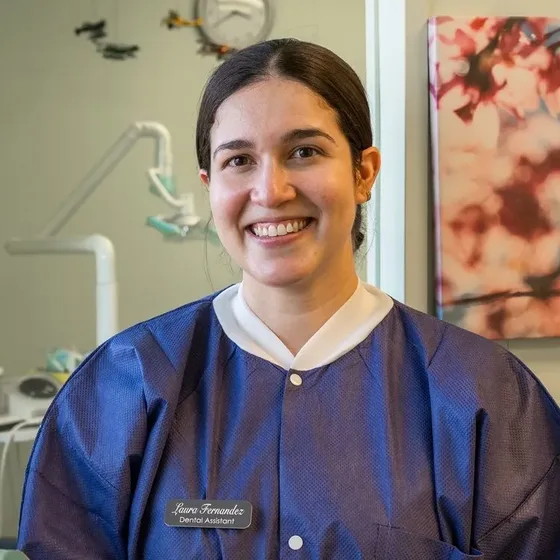
    Laura Fernandez, Dental Assistant

    Laura Fernandez

    Dental Assistant

    Laura, a Periodontist from the Dominican Republic, is diligently working towards her goal of becoming a licensed dentist in the USA. Known for her gentle touch and thorough care, our patients regularly praise her exceptional bedside manner. We are truly fortunate to have her as part of our team, and we look forward to supporting her continued success on her journey.

    Patient Testimonials

    “Dr. Lai is skilled, considerate and compassionate. He's done some pretty extensive crown work for me and the results have been perfect. I would recommend Dr. Lai to anyone. Kim, the receptionist, is absolutely friendly.”
    — Arielmly36

    Your opinion is important to us! Please let us know about your visit.

    Patient Resources

    Answers before you ask

    Q & A

    Why are my teeth sensitive?

    Sensitive teeth often come from the fact that your gums have slightly receded. This recession of the gum line allows the underlying dentin to show through which allows water and food easier access to the sensitive nerve. To manage this, there are a number of toothpastes, gels and even some dental procedures that can be applied. Speak to us in more detail if you have very sensitive teeth.

    What should I do to prevent gum disease and tooth decay?

    Great teeth and gum care start at home. Brushing and flossing on a daily basis is the best way to take care of your teeth and gums on a continual basis.   By keeping to a daily routine you will greatly minimize the risk of gingivitis or tooth decay as you age.

    What is Gingivitis?

    Gingivitis is a condition caused when bacteria surrounds the teeth and enters the gums.  The gums can become irritated, inflamed and often bleed.  In order to prevent the condition from worsening, regular hygiene visits are highly recommended.  During your visit, our Hygiene team will teach you the proper flossing techniques and Oral Hygiene protocol for Home Care will prevent the Periodontal Disease.

    What is Periodontal Disease?

    Periodontal Disease is a quiet disease that begins with little or no symptoms.  It is caused by bacteria that surrounds the teeth and enters the gums.  The immediate condition is known as ‘gingivitis’.  The gums become irritated, inflamed and often bleed.  If not properly treated, the condition worsens.  Noticeable symptoms now appear.  They include:

    • Bad Breath
    • Gum Recession
    • Gum Sensitivity to Acidic Foods
    • Abscesses
    • Tooth Pain
    • Tooth Loss
    How Do You Treat Periodontal Disease?

    Periodontal Disease is a chronic condition that needs immediate attention.  Through a series of Periodontal Cleanings, Root Planing & Scaling, Laser Therapy and Local Antibiotics, this condition can be controlled.  Periodontal Surgery is only necessary for severe cases.

    What is the Difference Between a White Filling and a Silver Filling?

    Silver Fillings known as Amalgam have been around for decades.  Made from a metal alloy, it was the best restoration for fillings.  The metal expands and contracts with the heat and cold placed in the mouth.  This allowed for little bacteria to enter a tooth once filled; keeping the tooth healthy and strong.

    White Fillings, also known as composites are often made of plastic or glass polymers. These cosmetic fillings allow us to fill a cavity with a substance that will look and feel just like your existing tooth structure.  This restoration is created with a resin material and fits tightly into a tooth to prevent decay.  Rather than a gray or silver material in your mouth, the composite color will match the tooth color.

    How Can I Improve My Smile?

    There are several ways in today’s Dental World to enhance your smile.  Certain procedures include:

    • Tooth Whitening
    • Bonding
    • Porcelain Veneers
    • Porcelain Crowns

    We have the capability to improve your smile using all or some of these procedures. For an exact consultation, please contact our office so that we may provide you with a customized treatment plan.

    What is Tooth Whitening?

    Tooth Whitening is a cost effective and safe procedure to create a beautiful, healthy smile.  Over the years, flouride is has been added to the whitening product.  This reduces the risk of tooth and gum sensitivity.

    Tooth Whitening must be monitored by your dentist and only done after a comprehensive exam and hygiene cleaning.

    The whitening process can last for a number of years if maintained properly.  Beverages such as coffee, tea, cola and wine will reduce the lasting effect.  Remember, if it could stain a white shirt, it will stain your smile!

    What is Bonding?

    Bonding is a cost effective procedure used to fill gaps in front teeth and to change a tooth’s color.  The immediate results are amazing.  Within a few hours, you will have a great smile!  Bonding like Tooth Whitening may change color over time due to coffee, tea, cola and wine.

    What are Porcelain Veneers?

    Porcelain Veneers are thin pieces of porcelain that go directly on your natural teeth. . This entire procedure can take as few as two visits.   Veneers change the size, shape and color of a patient’s teeth.  This procedure is used to repair fractured teeth, teeth darkened by age or medication, or a crooked smile.  Many times, patients ask for Porcelain Veneers to simply feel and look younger with a straighter, whiter smile!

    What are Crowns?

    Crowns are a permanent cosmetic procedure that covers the entire tooth.  It will change the size, shape and color of the teeth in as few as 2 visits.

    What is a Dental Implant?

    A Dental Implant is a “man-made” replacement for a missing tooth or tooth root.  Made from titanium, this screw-like object is inserted under the gum and directly into the upper or lower jaw bone.  There is usually minimal discomfort involved with this procedure.  After a period of a few months, the Dental Implant and the bone fuse together.  This creates an anchor for the new tooth to be placed onto the dental implant.

    What are the Benefits of Dental Implants?
    • Dental Implants look and function like your natural tooth.
    • Dental Implants are a permanent solution for missing teeth.
    • Dental Implants are maintained by routine hygiene visits to your dental office.

    Dental Implants decrease the possibility of bone loss, periodontal disease,  tooth movement, and further tooth loss.

    • Dental Implants replace the need for a Removable Full or Partial Denture.

    Dental Implants focus only on the tooth or teeth that are missing.  A traditional bridge would involve the two or more adjacent teeth being compromised to create a false tooth in between.

    Who is a candidate for Dental Implants?

    With major advancements in Dentistry and Dental Implants, most people are candidates for Dental Implants.  There may be exceptions due to chronic illness, heart disease, and severe osteoporosis.

    What does the Dental Implant Procedure Involve?

    The average Dental Implant Procedure takes 3 - 4 visits.  The first visit is to x-ray the area and take an impression for a surgical guide and a temporary prosthesis to cover the Implant.

    The next visit is to place the Implant. A local anesthesia is applied to the area.  (Any additional sedation is no longer necessary unless deemed by the dentist).   The dentist will then make a minor incision to place the implant. The implant is placed into the jaw bone.  The area will then be covered with sutures.  The procedure is usually completed with minor pain.

    You will next return in approximately 3 months to begin creating the Porcelain Crown to place over the Implant.

    How Much Does a Dental Implant Cost?

    Fees from Dental Implants vary from dentist to dentist.  Always schedule an Implant Consultation to discuss the procedure and all fees involved.

    How long does a Dental Implant last?

    With routine dental hygiene scheduled and proper home care, A Dental Implant can last approximately 30 years to a lifetime.

    Does your office offer financing for services provided?

    Please contact us to discuss the options we have available to make your perfect smile today!

    Post-Op Instructions

    It is important to follow instructions after you have oral surgery to ensure proper healing and to avoid complications. As a rule of thumb, you should always wait two hours after surgery before eating to let the anesthesia wear off. Trying to eat before this could result in soft tissue damage because you are not able to feel all of your mouth. The instructions found below are guidelines. After your surgery the doctor or dental assistant will give you full instructions on how to properly recover from surgery.

    Root Canal Therapy

    You can expect soreness after a root canal procedure for a few days. You should avoid chewing on the side of your mouth where the procedure was performed so you do not irritate the area and also to ensure that the temporary restorative material properly sets. You will also need to take an antibiotic to treat any remaining infection in your tooth. If you notice an increasing amount of pain or tenderness, a reaction to the medication, or the loss of the temporary restoration (filling) call your dentist immediately.

    Crowns and Bridges

    Before you receive your permanent crown/bridge you will first receive a temporary restoration. This is not as sturdy as the permanent version, so you should be careful when cleaning and eating. You should brush the area gently and should not pull up on the tooth when flossing because it could become dislodged. The same goes for eating. You should avoid sticky or chewy foods while you have the temporary in.

    There may be some sensitivity and irritation after the temporary or permanent is placed. This is normal and will subside after the soft tissue heals. A warm salt water rinse will help, and you can also take Advil or Tylenol if the pain does not go away.

    When the permanent crown or bridge is placed it may feel a little awkward for a few days. Your mouth needs to adjust to the new tooth, and it should feel like one of your natural tooth in less than a week. If your bite feels abnormal in any way, you should let your dentist know. Caring for your bridge or crown is just like caring for your own teeth. You should brush and floss regularly.

    White Fillings (Bonding)

    After the anesthesia wears off your teeth will likely be sensitive. You should avoid hot and cold food or drink for the next few days. After that initial period, your treated teeth will feel as good as new. Continue your normal hygiene plan to ensure that your fillings last for a long time.

    Scaling and Root Planing

    After this procedure your gums will probably be slightly sore and irritated for a few days. You should rinse your mouth with warm salt water (1 tsp salt/8 oz water) 2-3 times a day. This will relieve the pain and cleanse the area. Brushing and flossing should be continued right after the procedure, but you should brush gently so that you do not further irritate the area. If you experience any swelling or stiffness in the area you can place a cold compress on the area and take some pain relieving medicine. Avoid any hard or chewy foods for 2-3 days after the surgery to ensure the area heals correctly. If you continue to experience pain or swelling after a few days contact your dentist.

    Veneers

    Before you receive your permanent veneer you will first receive a temporary restoration. This is not as sturdy as the permanent version, so you should be careful when cleaning and eating. You should brush the area gently and should not pull up on the tooth when flossing because it could become dislodged. The same goes for eating. You should avoid sticky or chewy foods while you have the temporary in.

    There may be some sensitivity and irritation after the temporary or permanent is placed. This is normal and will subside after the soft tissue heals. A warm salt water rinse will help, and you can also take Advil or Tylenol if the pain does not go away.

    When the veneer is placed it may feel a little awkward for a few days. Your mouth needs to adjust to the new tooth, and it should feel like one of your natural tooth in less than a week. If your bite feels abnormal in any way, you should let your dentist know. When brushing and flossing you should pay close attention to the area between the veneer and the tooth at the gum line.

    Extractions

    After the surgery you will need to rest. You need to be driven home by a friend or family member because of the anesthesia. You can expect for the extraction site to bleed for a little while after the surgery. Gauze will be applied at the completion of the surgery, and you will need to change it when it becomes soaked. If bleeding continues for longer than 24 hours you should call your dentist. Rest when you return home, but do not lie flat. This could prolong the bleeding. Prop your head up on a pillow when lying down. Your dentist will prescribe you pain medication, so if you become sore take as directed. You can also use an ice pack for the pain. Your dentist might also provide you with a cleaning solution to clean the extraction site.

    You will be limited to soft foods for a few days after your surgery. Some recommended foods are:

    Gelatin
    Pudding
    Yogurt
    Mashed Potatoes
    Ice Cream
    Thin Soups

    ...and other food you can eat without chewing.

    When drinking, make sure you do not use a straw. The sucking motion can loosen your sutures and slow the clotting process. The same goes for smoking. If you have prolonged pain, bleeding, irritation, or don't feel that the extraction site is healing properly call your dentist for a follow up.

    Surgical Instructions

    It is important to us that our patients are informed during every step of their treatment so that they are well prepared and have the chance to ask questions. The following information is a starting point for researching your procedure and should assist in developing a list of questions to ask during your consultation.

    Before Anesthesia

    There are a few steps that patients need to take prior to anesthesia. First, you should not eat or drink anything at least 8 hours prior to surgery and refrain from smoking 12 hours prior to surgery. You will need someone to accompany you to the surgery and drive you home after. On the day of surgery, do not wear any jewelry, contact lenses, or dentures. If you regularly take medications, discuss those with the doctor to ensure that they are approved prior to surgery. Other than these simple considerations, there is nothing else you need to do to prepare for surgery.

    After Wisdom Tooth Removal

    Wisdom tooth extraction is a surgical procedure that requires some post-operative care to reduce the chance of infection or other complications. Immediately after surgery, a gauze pad will be placed over the extraction site, which should not be removed for at least 45 minutes, and then discarded after that. Refrain from drinking from a straw or rinsing the mouth to ensure that you do not dislodge the blood clot that has formed. Limit your activities that day. You can resume your regular activities the following day.  Take the pain medication as prescribed to reduce the amount of discomfort you feel after the local anesthetic wears off. As with any oral surgery, refrain from drinking through a straw as doing so creates suction and may disrupt the sutures.

    After Dental Implant Surgery

    After dental implant surgery, it is recommended that you take at easy for 48-72 hours. Resting assists the healing process and limits after surgery bleeding. Drink plenty of fluids, but nothing too cold. You may need to apply an ice pack to your face in twenty-minute intervals for the 2 days following surgery. If you received upper implants, do not blow your nose for two weeks. It is common to experience slight bleeding for about two days after surgery. You will feel slightly uncomfortable the first two days following surgery, but the third day is generally better. An increase in temperature of about 1 to 2 degrees is to be expected and is not a cause for concern. Finally, while you can eat when you are hungry, do not chew directly onto the bone graft.

    After Impacted Tooth

    A tooth becomes impacted when there is not enough room to accommodate the space in the dental arch and growth becomes impossible.  After surgery to remove an impacted tooth, mild discomfort and some swelling is expected. This is part of the process and should not alarm you. You may use cold compresses to alleviate the swelling. In addition, your doctor will prescribe pain medication, which should be taken as directed. Patients are also advised to favor the extraction area and modify their diet for a few days to allow for healing.

    Multiple Tooth Extractions

    The removal of one or two teeth is a simple procedure. Extracting multiple teeth requires that the jawbone be shaped and removed to prepare for a denture. You may experience the following after a multiple tooth extraction procedure. Within two days, you will experience the maximum swelling both inside the mouth and possibly around the eye as well. The area around your eye may also become discolored, which may be alleviated by a warm compress. The muscles near the extraction site may become sore after surgery, causing a sore throat. This is normal as well as the corners of your mouth becoming dry and cracked from being stretched open during surgery. In most cases, you will have a follow up appointment with your dentist within 48 hours after surgery to discuss any post surgery symptoms that you are experiencing.

    Links

    Below you will find a wide array of interesting and educational links that we feel will benefit your understanding and knowledge of your dental health. If you have a suggestion for a link that you feel would be of interest, please feel free to email it to us so we can share it with all of our patients.

    Dental Associations
    Dental Procedures and Topics

    New Patient Forms

    Coming soon!

    Educational Videos

    Questions about the educational videos or a written transcript? Call 781-963-1600 or email the office.

    Contact Us · Appointment Request

    Request an Appointment

    We encourage you to contact us via phone or email. Fill out a message and our friendly staff will get in touch with you as soon as possible.

    Our Location

    10 Mazzeo Drive, Suite 209
    Randolph, MA 02368

    781-963-1600
    Fax 781-963-1608
    [email protected]

    Email an Appointment Request Call the Office

    Hours of Operation

    • Monday12:00 pm – 7:00 pm
    • Tuesday9:00 am – 6:00 pm
    • Wednesday9:00 am – 6:00 pm
    • Thursday10:00 am – 5:00 pm
    • Friday9:00 am – 2:00 pm
    • SaturdayClosed
    • SundayClosed

    Is this your business? See the before & after →

    This site is an independent promotional redesign built by Wicked Fast Web to demonstrate our work — it is not officially affiliated with, endorsed by, or paid for by the business shown here. No subscription or payment is attached. If you're the owner and have questions, want to make it official, or want it taken down, get in touch. Prefer to just grab time on my calendar? Book a 15-minute call.